

How to Reduce COD Return Rates (RTO) for Your Online Store
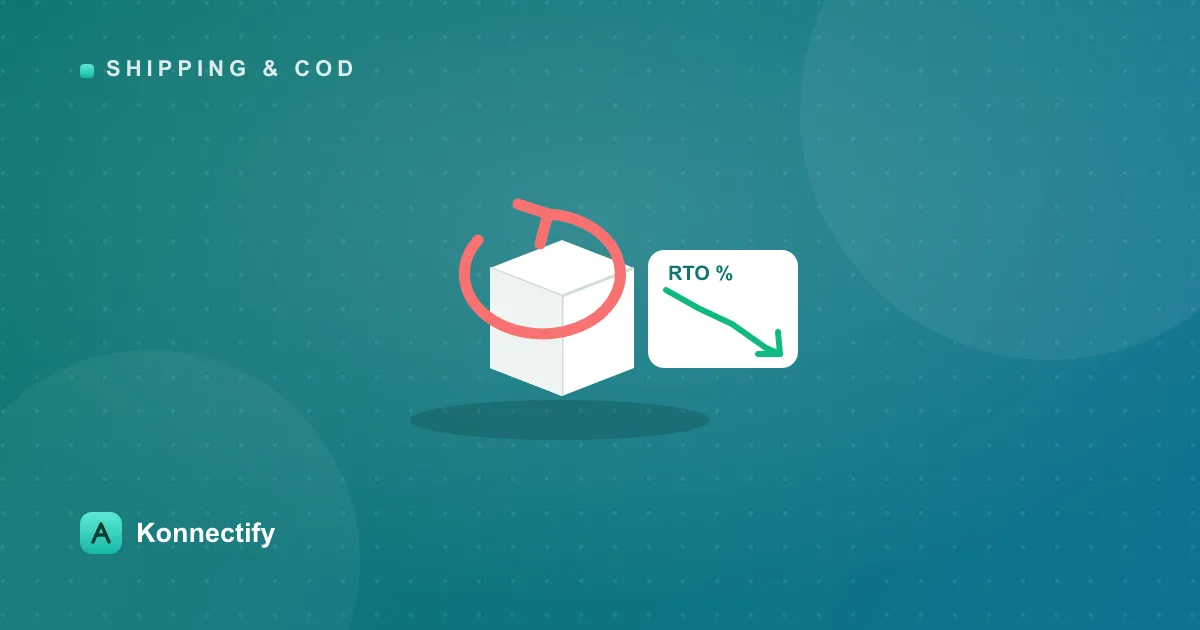
If you sell cash on delivery, learning how to reduce COD return rate is one of the highest-leverage things you can do for your margins. Every parcel that comes back as a return-to-origin (RTO) doesn't just lose you a sale, it quietly drains money in ways most store owners never add up. In COD-heavy markets like Pakistan, where a large share of orders ship without any upfront payment, RTO is often the single biggest hidden cost between a healthy store and one that's barely breaking even.
This guide explains exactly what RTO costs you, why COD orders get returned, and a practical playbook to bring your return rate down, measure it, and keep it low over time.
What is RTO and why it silently destroys margin
Return-to-origin (RTO) is any order a courier ships out but fails to deliver, so the parcel travels back to you. The customer never paid, you never earned, and yet the order was anything but free. Here's where the money actually goes:
- Forward shipping — you've already paid the courier to attempt delivery.
- Return shipping — most couriers charge again to bring the parcel back.
- Repacking and restocking labour — staff time to inspect, repack, and shelve goods.
- Locked-up cash — your capital is tied in inventory in transit for days.
- Dead or damaged inventory — parcels handled multiple times come back creased, opened, or unsellable.
A single RTO can wipe out the profit from two or three good orders. If 30% of your COD parcels bounce back, your real cost per delivered order is far higher than your spreadsheet shows. That's why reducing RTO often beats chasing new traffic: you're recovering margin you've already paid for.
Why COD orders get returned
RTO isn't random. The same handful of causes appear again and again, and almost all of them are fixable before the parcel ever leaves your warehouse.
Impulse orders and buyer's remorse
COD removes payment friction at checkout, which is great for conversion but also lets customers order on a whim. By the time the rider knocks, the urge has passed and they simply refuse the parcel.
No order confirmation
If nobody confirms the order with the customer, you're shipping on hope. A quick confirmation call or message filters out fake orders, duplicates, and people who changed their mind.
Wrong or incomplete addresses
Typos, missing house numbers, and vague area names cause failed delivery attempts that often end in RTO. Riders won't chase an unclear address forever.
Slow delivery and poor tracking communication
The longer a parcel takes, the more likely the customer cools off or buys elsewhere. Silence makes it worse, if buyers don't know where their order is, they assume it's lost and refuse it.
Serial returners
A small group of customers habitually order COD and refuse delivery. Without order history, you keep shipping to them and keep eating the loss.
The playbook to reduce COD return rate
You don't need every tactic at once. Start with confirmation and address verification, the two highest-impact steps, then layer the rest. Here's the sequence:
- Confirm every order before dispatch. A WhatsApp message or call to verify the customer actually wants the product is the single most effective RTO reducer. Real intent in, fake orders out.
- Verify the address and phone number. Read the address back, confirm the area and a landmark, and check the phone reaches the buyer. Fix anything unclear before you book.
- Set clear delivery expectations. Tell the customer the price, what's in the box, and when to expect the rider. Surprises cause refusals.
- Dispatch fast. Book and hand over the same day or next day. Speed is the cheapest loyalty you can buy, and it shrinks the window for second thoughts.
- Send proactive tracking updates. A "your order is out for delivery" message keeps the customer ready and reachable when the rider arrives.
- Choose reliable couriers per area. Delivery success varies by courier and region. Match the courier to the zone and watch each one's RTO performance.
- Flag and block repeat offenders. Keep a record of customers who repeatedly refuse parcels, and require advance payment from them or stop shipping COD entirely.
- Take a partial advance on high-value orders. Even a small upfront payment dramatically raises the odds a pricey order is accepted, because the buyer now has skin in the game.
For the confirmation step specifically, our WhatsApp order confirmation guide walks through message templates and timing that get high response rates without annoying customers.
How to measure your RTO rate (and track it over time)
You can't improve what you don't measure. The core metric is simple:
RTO rate = (orders returned to origin ÷ total orders dispatched) × 100
Calculate it monthly, but don't stop at the overall number. Break it down so you can act:
| Segment by | What it reveals |
|---|---|
| Courier | Which partner delivers reliably in which zone |
| City / area | Regions where addresses or coverage are weak |
| Product or price band | Whether high-value items need an advance |
| Confirmed vs. unconfirmed | The real ROI of your confirmation process |
| Customer | Serial returners worth flagging |
Track the trend, not just the snapshot. A healthy COD store keeps working RTO down month over month. If the number creeps up, segment the data to find the new leak, often a single courier or city is dragging the average. To weigh RTO against your other COD costs, see our complete guide to COD in Pakistan.
How Konnectify helps you cut RTO
Most of this playbook falls apart in practice because it's spread across WhatsApp, courier portals, spreadsheets, and your store admin. Konnectify brings it into one workflow so the right steps actually happen on every order.
- WhatsApp confirmation before booking — reach out to confirm intent, address, and phone straight from the order, so you only ship parcels real customers expect. Unconfirmed orders never get dispatched by mistake.
- Courier tracking and status sync — book PostEx, Leopards, and other couriers (one-click or in bulk) and let Konnectify pull live tracking and delivery status back automatically, so you can trigger "out for delivery" messages and catch failed attempts early.
- Customer history at a glance — see a buyer's past orders and refusals before you ship, making serial returners easy to flag and handle.
- Reports that show real margin — RTO, COGS, and net profit in one place, so you finally see what each delivered order actually costs.
Because Konnectify unifies Shopify and WooCommerce orders in a single dashboard, your confirmation, dispatch, and tracking process is identical no matter where the sale came from. Choosing the right delivery partner matters too, our roundup of reliable courier services for e-commerce can help you pick by zone.
Frequently asked questions
What is a good COD return rate?
It varies by category and region, but most COD stores see 20–40% RTO without active management. With consistent order confirmation, address verification, and fast dispatch, well-run stores often pull it down into the 10–20% range or lower.
Does order confirmation really reduce returns?
Yes, it's the highest-impact lever. Confirming intent and verifying the address before booking removes fake orders, duplicates, and remorse cancellations, the largest single source of RTO. A short WhatsApp confirmation typically pays for itself many times over.
Should I stop offering cash on delivery to cut RTO?
Usually no, COD drives most volume in markets like Pakistan, so removing it can cost more in lost sales than RTO costs you. A better approach is taking a partial advance on high-value orders and flagging repeat offenders, rather than dropping COD entirely.
How do I deal with serial returners?
Keep order history so you can spot customers who repeatedly refuse delivery. For those buyers, require advance payment, switch them to prepaid only, or stop shipping to them. With Konnectify's customer history, these patterns surface before you book the next parcel.
Ready to confirm orders, track every courier, and cut RTO in one place? Start free with Konnectify and turn your COD workflow into a margin machine.
Bilal Ahmed
Logistics & COD Lead
Bilal covers couriers, cash on delivery and fulfilment. He focuses on cutting RTO and building reliable shipping operations for e-commerce brands in Pakistan.
Run your stores from one dashboard
Unify Shopify, WooCommerce, WhatsApp & POS — confirm COD on WhatsApp, book couriers and track everything in one place.
Related articles
Oct 09, 2026
Cash on Delivery (COD) in Pakistan: The Complete Guide for Online Stores
Cash on delivery dominates Pakistani e-commerce, but it carries hidden costs like RTO and locked-up...
Sep 23, 2026
Best Courier Services in Pakistan for E-commerce (PostEx, Leopards & More)
How to choose the right COD courier for your Pakistani online store: coverage, remittance speed, RTO...